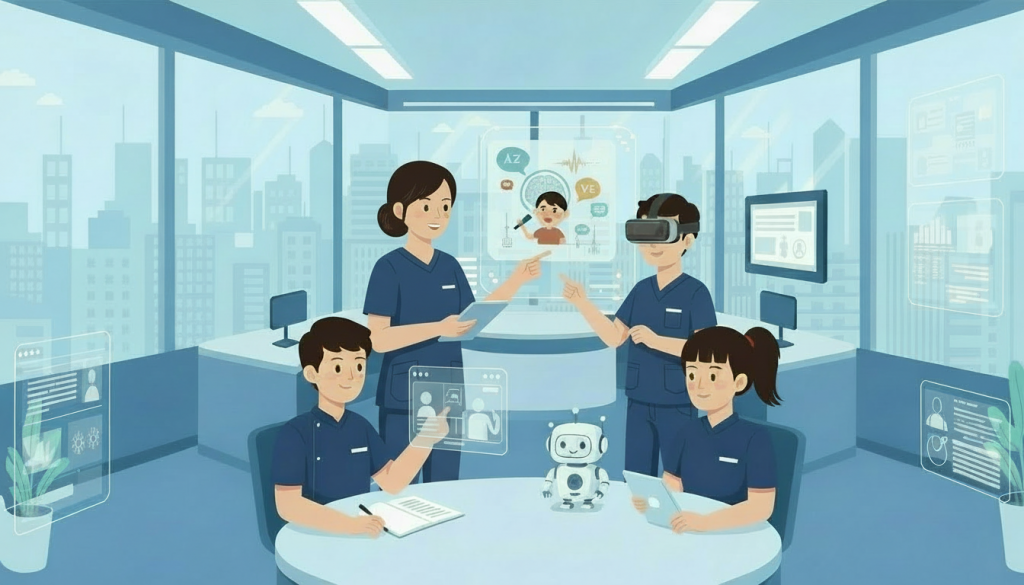
Innovations in clinical learning refer to the introduction of new ideas, methods, and technologies that enhance the educational experience in clinical settings. These innovations can include advanced simulation technologies, practices to enhance workplace skills and mindset, evidence-based practices, and interdisciplinary collaboration models. By embracing these approaches, educational programs create dynamic learning environments that better prepare students for the complexities of real-world clinical practice.
The importance of these innovations lies in their ability to address the evolving needs of the healthcare landscape, where advancements in technology and changes in patient demographics require future clinicians to be adaptable and skilled in modern tools and techniques. Innovations foster critical thinking, problem-solving, and hands-on experience, essential competencies for speech-language pathologists who assess and treat diverse communication and swallowing disorders. By engaging in a variety of experiential learning, students enhance their clinical reasoning and decision-making skills, ultimately leading to improved patient outcomes.
The purpose of implementing these innovations in HKU Bachelor of Science in Speech-Language Pathology clinical program is multifaceted. Firstly, it elevates the quality of education by exposing students to the latest practices and technologies, increasing their employability and readiness for contemporary clinical environments. Secondly, these initiatives bridge the gap between theoretical knowledge and practical application, allowing students to translate classroom learning into effective clinical practice. By fostering a culture of innovation, educational programs encourage ongoing professional development among faculty and students, promoting a lifelong learning mindset crucial in a constantly evolving field. Ultimately, integrating clinical innovations enhances the educational experience and contributes to the advancement of the profession, ensuring that graduates are competent clinicians and leaders in speech-language pathology.
Advocating Clinical Education